

Cleaning Hacks

The Chemicals Hiding in Every Load, and What Researchers Have Found They Do to Your Body Over Time
Let's talk about the thing you use fifty-two times a year (at minimum) and have probably never once thought to question: your laundry detergent.
You pour it in, you don't measure it, you definitely don't read the back label, and you trust that "clean fresh linen scent" means what it says. Fair enough — nobody has the bandwidth to interrogate every bottle under the sink. But it turns out that bottle is doing a lot more than removing grass stains, and some of what it's leaving behind on your clothes, in your air, and eventually in your body has caught the attention of actual researchers. Not internet researchers. The kind with lab coats and published studies.
So let's go through what's actually in there, and what the science says happens when you're breathing it in and wearing it against your skin, load after load, for years.

Your Grill Is Disgusting. Let's Fix That.
Nobody wants to hear this, but somebody has to say it: that grill you fired up last weekend — the one that produced something genuinely delicious and earned you several compliments — is almost certainly harboring a situation on its grates that would give a health inspector pause.
Grease. Carbon buildup. The ghost of last July's brisket. A layer of what can only be described as "accumulated ambition." It is all in there, quietly baking on every time you cook, flavoring your food in ways you did not intend and did not invite.
The good news is that cleaning a grill is not complicated. The bad news is that most people do it once a year with a wire brush and some optimism and then consider the matter closed. We can do better — and whether you prefer a chemical shortcut or a more natural approach, you have good options. Let's start with the one rule that applies to all three.

Spray It, Walk Away, and Come Back to a Cleaner House. Yes, Really.
Here is a cleaning philosophy that does not get nearly enough credit: sometimes the best thing you can do is apply something and then go do literally anything else while it works for you. No scrubbing. No elbow grease. No standing over a surface wondering if you are making progress or just moving the problem around. Just spray, set a timer, and come back to a situation that has improved without your direct involvement.
This is not laziness. This is chemistry. And once you understand which products and mixtures actually do the work while you are not watching, you will wonder why you spent so many years aggressively scrubbing things that just needed a few minutes to soak.
Here is what actually works, what it is safe for, and — just as importantly — what to keep away from your kids and pets while it is doing its job.

Stains Happen: What to Actually Do About Them Before the Dryer Seals Their Fate
Here is the thing about stains — they always happen at the worst possible moment. Not on a Tuesday when you are wearing your bum clothes and have nowhere to be. No. It is the morning of something important, it involves something red, and you are standing in your kitchen holding a paper towel wondering if anyone will notice if you just... stand with your arm in a weird position all day.
They will notice.
The good news is that most stains are not actually the end of the garment. They just require knowing what you are dealing with before you throw it in the wash and accidentally set it permanently into the fabric forever. That last part is important. Heat is the enemy of stains. If you are not sure a stain is out, do not put it in the dryer. Once that dryer heat hits, whatever is left bonds to the fabric like it signed a lease.
Now let's talk about what actually works.


The Cleaning List Your House Has Been Waiting For You To Find
You are not a dirty person. You vacuum. You wipe down the counters. You do the dishes before they become a situation. By most reasonable standards, your house is clean — and yet, somewhere in your home right now, there are surfaces quietly accumulating enough grime to make a health inspector pause. Not because you are neglectful. Because nobody told you they needed to be cleaned, and they are very good at looking fine from a distance.
This is that list. The one your house has been trying to get your attention about for a while now. Brace yourself — some of these are going to make you feel a little bit like you have been living a lie.

Steam Cleaning: Is It Actually Getting Things Clean, or Just Making Them Hot and Wet?
If you have ever watched a steam cleaner commercial and found yourself squinting at the television thinking that seems too good to be true — you are asking exactly the right question. No chemicals. No scrubbing. No elbow grease. Just steam? It has the same energy as every infomercial product that promised to change your life and ended up in a garage sale two years later.
But here is where it gets interesting: it actually works. And once you understand the science behind it — which takes about thirty seconds — you will never wonder again.

How to Get Your Grout Actually Clean (Without Destroying Your Arm in the Process)
Can we talk about grout for a minute? Specifically, can we talk about the grout you have been avoiding staring too hard at because you already know what you are going to see? That gray — or is it brown — network of lines between your tiles that seems to attract every speck of dirt and mystery stain your bathroom and kitchen have to offer, and then hold onto all of it like its life depends on it.
Grout is one of those things that is genuinely easy to keep clean when you stay on top of it, and genuinely miserable to deal with when you don't. And most of us don't. Because life is busy, the grout is on the floor or the wall, and there are about forty-seven other things competing for your attention at any given moment.
But here is the good news. Getting grout clean does not have to mean getting down on your hands and knees with a toothbrush and scrubbing until your shoulder gives out. There are better ways — including one that has been absolutely taking over social media lately that you are going to wish somebody told you about years ago.

The Shower Head Fix You Can Do in Your Sleep (Literally)
You scrub your shower. You wipe down the walls. You handle the soap scum situation with the grim determination of someone who has accepted this is just life now. But when is the last time you looked up — really looked up — at your shower head?
If the answer is "I try not to," you are probably dealing with some crusty, mineral-buildup-covered, barely-functioning water pressure that is frankly a little depressing to think about. The nozzles are clogged. The spray pattern is uneven. What was once a satisfying shower experience has quietly become a trickle situation, and you have been standing there in mild disappointment every morning without realizing the fix takes about two minutes and happens while you are asleep.
You do not even have to do anything. You just have to know the trick.
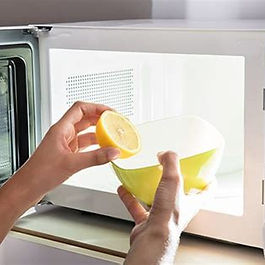
The Five-Minute Microwave Trick You Are Going to Wish You Knew Sooner
No matter how many fancy plastic coverings you buy, somehow your microwave always ends up looking like mini explosions went off and hit every nook and cranny with some sort of food. It really does defy belief how far in the corners the food somehow manages to make it. You stand there staring at it thinking — how? How did it get up there? You were heating up soup. It was in a bowl. With a lid.
And it's not like it's the easy-to-wipe-off food. No, it is the stuck-on, make-your-arm-sore-from-scrubbing food. The kind that has had time to bond with the surface on a molecular level and has decided it lives there now. You could chisel at it. You could apply increasingly aggressive cleaning products and increasing amounts of elbow grease. Unless you are just wanting the extra exercise, here is a trick for you:

The Ceiling Fan Cleaning Hack That Will Change Your Life (Or At Least Your Tuesday)
You assess the blade warily while approaching with your chosen tool. You know how this will end. Dust everywhere — in your hair, on your clothes, sprinkled in a perfect circle around you on the floor like some kind of cursed snow globe effect. And not regular dust, either. The special ceiling fan kind, where it comes down in clumps because it has been up there long enough to form actual communities.
Thankfully, you only have to do this once a month or so. But what if I told you there is a better way? A quick, easy, genuinely satisfying way to clean each blade without the dreaded dust-fall? Because there is.